Showing posts with label Business Analytics. Show all posts

Tuesday, 9 May 2017

Introduction: Uber and Big Data

Sometimes I use Uber to commute from one area to another. Well, to be honest, Uber made my commuting struggle into a piece of cake. Just by one click, I can move from point A to point B smoothly. But Have you ever thought how did Uber exist? This interesting company has no cars no drivers and it is worth 66 billion dollars.

Before I dive into more details about Uber, let me begin with a brief history about Uber founder. Travis Kalanick is a programmer and businessman.  In 2016, he entered the Forbes list of the 400 richest Americans at position 78, with an estimated net worth of $6.3 billion (1). Uber was not the first Startup for Travis. In fact, in 1998, Travis Kalanick helped Dan Rodrigues to found Scour Inc., a multimedia Internet search engine, and Scour Exchange, a peer-to-peer file sharing service. However, in October 2000, Scour Inc went bankrupt after being sued by several entertainment companies for around $250 billion. Then, in 2001, he started a new company called Red Swoosh, which was another peer-to-peer file-sharing company.  Yet, in 2007 Kalanick sold RedSwoosh to Akamai for $23 million and became a millionaire.
In 2009, Uber, the transportation network company, was born in San Francisco California, operating in 570 cities worldwide. Uber has reshaped the transportation Industry considerably, with Uber spreading to more than 70 countries and gaining a valuation of nearly $70 billion, and its business continues to grow. Uber has been a market leader in the sharing economy, and the gross revenue doubled to $20 billion in 2016. In this blog, I will provide a full explanation on how Uber works and states the different type of services that Uber provide.

How Does Uber Work?
This a simple chart explains how Uber works. First, a rider arises a request via Uber app to get a ride from point A to point B. Based on the geographical location and time, Uber will use an algorithm to determine to the nearest driver at the cheapest fares within a 15 second. when the driver arrives at the rider location, he/she pick the rider up. Meanwhile, the driver will start the trip and he/she will end when the rider gets to wanted distention. For the end users, I mean the rider and the driver, the process seems very simple. However, there are many works and process have to be done in order to ensure that Uber services meet the consumers' satisfaction.


A Variety of Service 
Uber is one of the most innovated company as it offers various service levels. These are a list of services that might be available in different cities or countries:
  • UberPOOL is the least expensive level of service, in which the customer may share the ride with another passenger going in the same general direction. 
  • UberX is a level of service in which the rider will get a private ride. 
  • UberGo is available in India, provides for a ride in a hatchback. 
  • UberTAXI is available in some markets, allows users to summon a taxi using the Uber software application 
  • UberEATS allows users to have meals delivered from participating restaurants by Uber drivers. 
  • UberRUSH is a courier package delivery service available in New York City, San Francisco, and Chicago. 
  • UberBOAT is available in Istanbul, is a water-taxi service that allows users to travel by Beneteau boats across the Bosporus strait.
The next blog will demonstrate how Uber uses Big Data for Surge pricing and rating systems.

Friday, 28 April 2017

What Does Big Data mean to USPS?


In the past, Postal Service delivered papers, envelopes letters only. However, with the advancement of information system and technology, the situation has changed totally. As we know, the e-commerce movement has shaped the Postal Service carriers 180 degrees. United States Postal Service has expanded its role and the concepts of Postal Service has changed dramatically. Due to the evolution of technology, the USPS system has evolved considerably over the years. In this blog, I will explain what big data means to united states postal service.
For the USPS, there is no lack of postal data it is already big. However, USPS problem was dealing with the imbalance between the analyzing data and extracting value out of it. USPS decided to embrace Big Data and the Internet of Things that will completely transform the old postal system. Using big data to provide timely, more cost-effective and more reliable services. USPS started developing a new project called the "Internet of Postal Things Project."

“The Internet of Postal Things (IoPT) — instrumenting the postal infrastructure with low-cost sensors to enable them to collect, communicate, and act upon a broad variety of data — could help the Postal Service generate operational efficiencies, improve the customer experience, and develop new services and business models.”(1)

So, this system would allow it to track the location of employees, vehicles, and individual pieces of mail in real time. As a result, this project will tighten up USPS operations and boost customer service through implementing big data analytics. To understand how The Internet of Postal Things will work check out this video:


As it shown in the video, there are four main IoPT applications:
  • Transportation and Logistics: Sensors to monitor the postal fleet could maximize efficiency, reduce fuel costs and ensure maintenance resources are used to the greatest effect.
  • Smarter Postal Buildings: Like transportation, smarter buildings could reduce energy usage and optimize operations, security and safety.
  • Enhanced mail and parcel services that include applications to protect and improve the core business. Sensors generate new data that increase the value of products for senders and recipients and enable the creation of new services.
  • Neighborhood Services: For carriers on regular routes, IoPT data could help increase efficiency and provide a larger view of what services are used in a community.

IoPT Areas of Application and Selected Use Cases


Implementing the Internet of Postal Things will:
  • Identify technical problems that make it difficult for postal workers to do their jobs
  • Help people track their mail
  • Make it easier to maintain vehicles
  • Find more efficient routes to deliver mail
  • Identify employees that need additional training
  • Assess weather conditions
  • Make sure drivers are complying with traffic laws

To sum up, the project is still a work in progress, and it may not be implemented for a few years. However, implementing the Internet of Postal Things successfully could cut costs, generate efficiencies, optimize processes, and respond to customer demands for information and customization. It could also modernize the way it delivers its core business, generate new revenue, and ultimately create new business models. At the end, the development of an open platform where data are stored, managed, and shared, as well as strong privacy and security policies will be key to the successful implementation of an IoPT.

Monday, 24 April 2017

The Essence of Data Visualization (Conclusion)

As I mentioned previously that data visualization is a combination of art and number. When it combined together, it creates a special language that helps us communicate information better, and the attract our eyes and mind to discover patterns, trends, and correlations in our businesses that might otherwise go undetected.

In Ghofran Batterjee’s blog mentioned that “Due to the easy accessible of data analytics that is assorted and represented impactful visually and had a better efficiency in representing the information, decision makers can identify new patterns because, without a doubt, it is like taking a further step by examining the graph or chart for more details and information and engaging the message quickly.” I totally agree with her on this point. Indeed, focusing on the key challenges analysts face trying to communicate complex information, and how visual communication can help.


But, What Are Some of The Best Data Visualization Tools?


I totally agree with her on this point. Indeed, focusing on the key challenges analysts face trying to communicate co


Many digital marketers asking the same question about which is the best available tools for data visualization that will help them to translate the collected data into meaningful information.
Here are the most popular tools for data visualization:
  1. SAS Visual Analytics
    • This tool allows you to create interactive reporting in a visually appealing format and dashboards.
    • Users can enhance the analytic power of their data, explore new data sources, investigate them, and create visualizations to uncover relevant patterns.
    • Enables users to apply the power of SAS analytics to massive amounts of data.
    • Empowers users to visually explore data, based on any variety of measures, at amazingly fast speeds.
  1. Tableau  Norah's Marketing Analytics Blog gives an excellent explanation for Tableau
    • Easy to integrate
    • Visually-appealing reports that are easy to understand
    • Easy to use
    • Create visualizations for a large amount of data without crashing


Sunday, 23 April 2017

The Essence of Data Visualization

In the last blog, I gave an overview about data visualization. Today, we will dive more into the importance of data visualization to ensure an organization’s success.
A little fact about the human brain process, “the human brain processes images 60,000 times faster than text, and 90 percent of information transmitted to the brain is visual. “(1)
Since we are visual by nature, organizations must leverage data visualization and unlock their true potential to meet mission and business goals.
What is the Importance of Data Visualization?
Regardless of industry or size, all types of businesses are using data visualization to make highly informed decisions quickly. Organizational leaders need to be able to access and interpret data in real-time. Moreover, to identify new business opportunities ahead of the market, business leaders require the ability to access, evaluate, comprehend, and act on data faster and more effectively than ever before.
The importance of using data visualization essences around comprehending information more quickly. By using graphical representations, businesses can see large amounts of data in clear, cohesive ways and draw conclusions from that information. As a result, businesses can address problems or answer questions in a timelier manner. Another point is that revealing emerging trends in the market. This can give businesses an edge over the competition. How to incorporate data visualization with storytelling?

Storytelling is the best method that can be used to translate numbers into meaningful facts that organizations could utilize to ensure success. As digital marketers, creating a remarkable story to the audience and definitely use data visualization to perfect our narrative. We are responsible for bridging the gaps between the data and those who need to learn something from it. Today, data is powerful, but with a good story, it will be unforgettable.
“data-driven stories attract the kind of social media attention that publishers dream about: fresh data and infographics spread across Twitter, Facebook and other social channels precisely because they are able to tell a story in a concise, compelling and visually appealing way.”(2)
Indeed, using data to tell a story to touch the audience emotions and keeps them coming back for more. Using data visualization as your storytelling method gives you the power to translate complex ideas and vast of information into remarkable digital experiences.
Characteristics of effective graphical displays(3)
Excellence Graphical displays should:
  • Show the data.
  • Induce the viewer to think about the substance rather than about methodology, graphic design, the technology of graphic production or something else.
  • Avoid distorting what the data has to say.
  • Present many numbers in a small space.
  • Make large data sets coherent.
  • Encourage the eye to compare different pieces of data.
  • Reveal the data at several levels of detail, from a broad overview to the fine structure.
  • Serve a reasonably clear purpose: description, exploration, tabulation or decoration.
  • Be closely integrated with the statistical and verbal descriptions of a data set.


Examples of data visualization:

what 2016 would look like if just women voted?

The Web and social analytics dashboard by Kilpfolio
To learn more about the different types of charts and when to use them please check out Vita Savenko Blog.
In the next blog, I will provide a comparison between the best data visualization tools

Saturday, 22 April 2017

The Essence of Data Visualization (Overview)

Data visualization is a process of converting unorganized data to a visual context which helps people to understand patterns, trends, and correlations of the collected data. The best practice, before starting data visualization, data must be gathered, organized, interpreted and then analyzed data to provide any meaningful value.

The main goal of data visualization is to communicate information clearly and efficiently via statistical graphics, plots and information graphics. Effective and clear visualization helps users analyze and reason about data and evidence. It makes complex data more accessible, understandable and usable.

“To convey ideas effectively, both aesthetic form and functionality need to go hand in hand, providing insights into a rather sparse and complex data set by communicating its key-aspects in a more intuitive way.”(1)

Fernanda Viegas and Martin M. Wattenberg have suggested that

"an ideal visualization should not only communicate clearly but stimulate viewer engagement and attention."

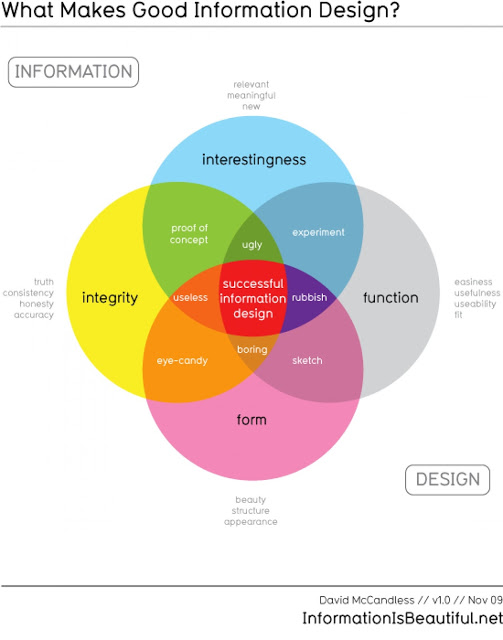
I have come across a very interesting Ted Talk which explains The beauty of data visualization for David McCandless. In his ted talk, He explains how information design can help us get through information glut on the Web and how simple charts can show patterns that we would never have seen otherwise.

Watch his TED Talk: The Beauty of Data Visualization


In the next post, I will explain the importance of data visualization, data visualization characteristics, and more.  

Friday, 14 April 2017

Case Study: How does Dollar Shave Club use data analytics to ensure its digital marketing strategies?

In this blog, I will talk about How Dollar Shave Club uses data analytics to ensure its digital marketing strategies, and I will cover their e-mail marketing and video content marketing as these were the main important part of their digital marketing success as a startup business.


Dollar Shave Club is a company started in 2011 by Michael Dublin and Mark Levine in Venice, California. Their business is selling cheap blades than the ones available on the market. However, instead of using traditional retail channels they have decided to sell directly to their customer using a subscription model. As an online business, increasing their conversion rate as well as the number of products ordered by their current customers are the Dollar Shave Club’s goals. As any startup business, Dollar Shave Club faced a problem with implementing sampling program strategy. The company had a program where it sent samples to customers to entice them to buy new products. Dollar Shave Club found that blanket sampling is very costly. Moreover, the company didn’t have the right tool to analyze data that might help it better target the samples. Hence, they decided to use Looker Data Sciences Inc. SaaS to analyze all their data to leverage this business opportunity.


“The result is impressive; Dollar Shave Club’s sampling program is able to achieve a 100% return on investment.” (1) Dollar Shave Club is now able to know exactly what sample their clients will like based on their previous purchases and types of subscriptions.


Email marketing:
Dollar Shave Club used data analytics to better personalize email marketing. Data was being collected from email promotions, Web site traffic, and volume of customer help requests, but unfortunately, Dollar Shave Club couldn’t take advantage of that data. Dollar Shave Club was starting using Looker to analyze data and provide a better business solution. As a result, Dollar Shave Club discovered that customers who buy the Shave Butter product are likely to buy other products as well. As well, Dollar Shave Club used Looker to do A/B testing of email campaigns. Dollar Shave Club made some optimizations to the collected data to improve targeting, the brand persona, and content creation strategies. Better data analytics has helped Dollar Shave Club to strengthen its e-mail marketing program based on customer preferences.


Dollar Shave Club email marketing
Video marketing:
Everyone knows how video marketing has shaped the success of Dollar Shave Club. YouTube was where they began back in 2012. Basically, their first video went viral. As a result, within the first 48 hours of their video going live, the company generated 12,000 new customers. This one of the most successful startup story that utilizes digital marketing to target their audience.
“We do use irreverence and humor as a really critical mechanism to deliver that relatability,” says Dollar Shave Club CMO Adam Weber, “That’s what we really aim to do from a tonality standpoint that I think is different than how brands have talked to guys in the past.”(2)
Dollar Shave Club uses video as an amazing platform for storytelling.  Videos reach a large number of consumers and establish a much deeper emotional connection with video than you can in other creative venues. Telling stories via video offers a lot of unique capabilities that something like television doesn’t offer.
Unlike traditional TV advertising, people are watching Dollar Shave Club video. The 94-second spot is entertaining, engaging, and hilarious. Dollar Shave Club uses humor, social media, and originality to connect with customers.
HubSpot shares a number of compelling stats that show why diversifying content marketing to include video are a smart move:

  • 92% of mobile video consumers share videos with others
  • More than a third of all online activity involves watching videos
  • More than a third of consumers trust video ads
  • 80% of users can recall a video ad they viewed in the last 30 days
  • Enjoyment of video advertising increases purchase intent by 97% and brand association by 139%

What the FAQ Marketing Campaign:

On their latest marketing campaign, which is called “What the FAQ?”, It’s a video series that Dollar Shave Club has basically used to address a lot of barriers that were hearing their customers talk about as to why they didn’t want to sign up.
“The videos answer questions around contracts, quality of razors, what members think of the razors, if it's possible to switch razors, what happens if you don't grow enough hair to justify a monthly subscription, what makes DSC so special compared to other services and why people should try DSC in the first place.The campaign will live online in pre-roll ads and other formats, including use as modules serving as actual FAQs on the website, Mr. Brownstein said, adding that it has production quality that would allow adaptation for TV if needed.”(3)

As a startup business, Dollar Shave Club has a unique idea and business model that cannot be duplicated. It is true, at their beginning data analyzing and interpreting were their real struggle. However, after implementing the right business analytics tool, Dollar Shave Club had leverage that opportunity to derived massive growth in ROI and number of subscribers. Video marketing and email marketing were their most powerful tool that Dollar Shave Club has utilized to engage with their customers and that made a difference in the company success.

Sunday, 9 April 2017

Is There a Difference Between Business Intelligence And Business Analytics?

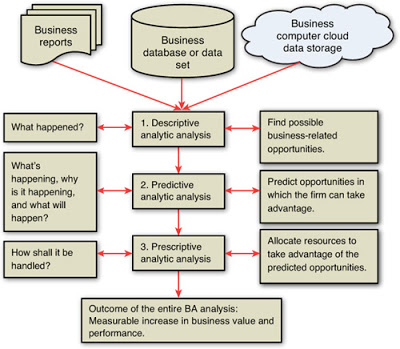
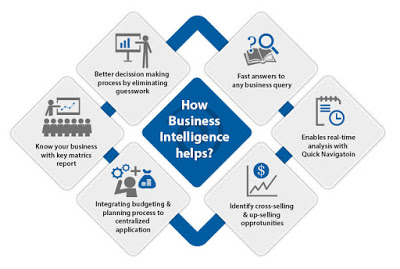
Many experts argue whether there is a big difference between business intelligence and business analytics. The truth is that they have the same objective. Both Business analytics and business intelligence exist to boost efficiency and sustainability of a business by concentrating on data analysis. However, I  will clarify the doubt about the differences.
Business analytics (BA):
According to BetterBuys definition of BA,
"Business analytic utilities statistical analysis, data mining ,and quantitative analysis to identify past business trends. It then uses that data to predict and prepare for future business climates. In effect, business analytics uses predictive analysis to solve problems before they have occurred."


Business Intelligence (BI):
Select Hub defines BI as the following,
"Business intelligence is used to maintain, optimize , and streamline current operations. BI improves and maintains operational efficiency and helps businesses increase organizational productivity. Generally,  Business intelligence includes doing operations such as developing Key Performance Indicators (KPIs), Trending Analysis, Predictive Modelling, and dashboards."


The similarity:
Similar to Business Intelligence, Business analytics collects and analyses data, employs predictive analytics and generates richly visualized reports. This helps organizations to identify and address future opportunities.

The differences:

Business Intelligence

Business Analytics

Business Intelligence is all about amassing and accessing big data.

Business Analytics help organizations to determine and understand the data they have collected in order to define and measure the success of their performance.

BA helps to anticipate the new trends and needs of the future.

Business Intelligence uses past and current data to optimize the present for current success.

Business Analytics uses the past and analyses the present to prepare businesses for the future.

Along with having a clear goal, implementing business analytics and business intelligence can help businesses to achieve current success and prepare for the future. Substantially, Business intelligence is all about what you have and business analytics is about predicting the trends.